Mandala and the Path of Individuation – Philosophy and the Psychology of the Soul (Ljubljana, Slovenija)
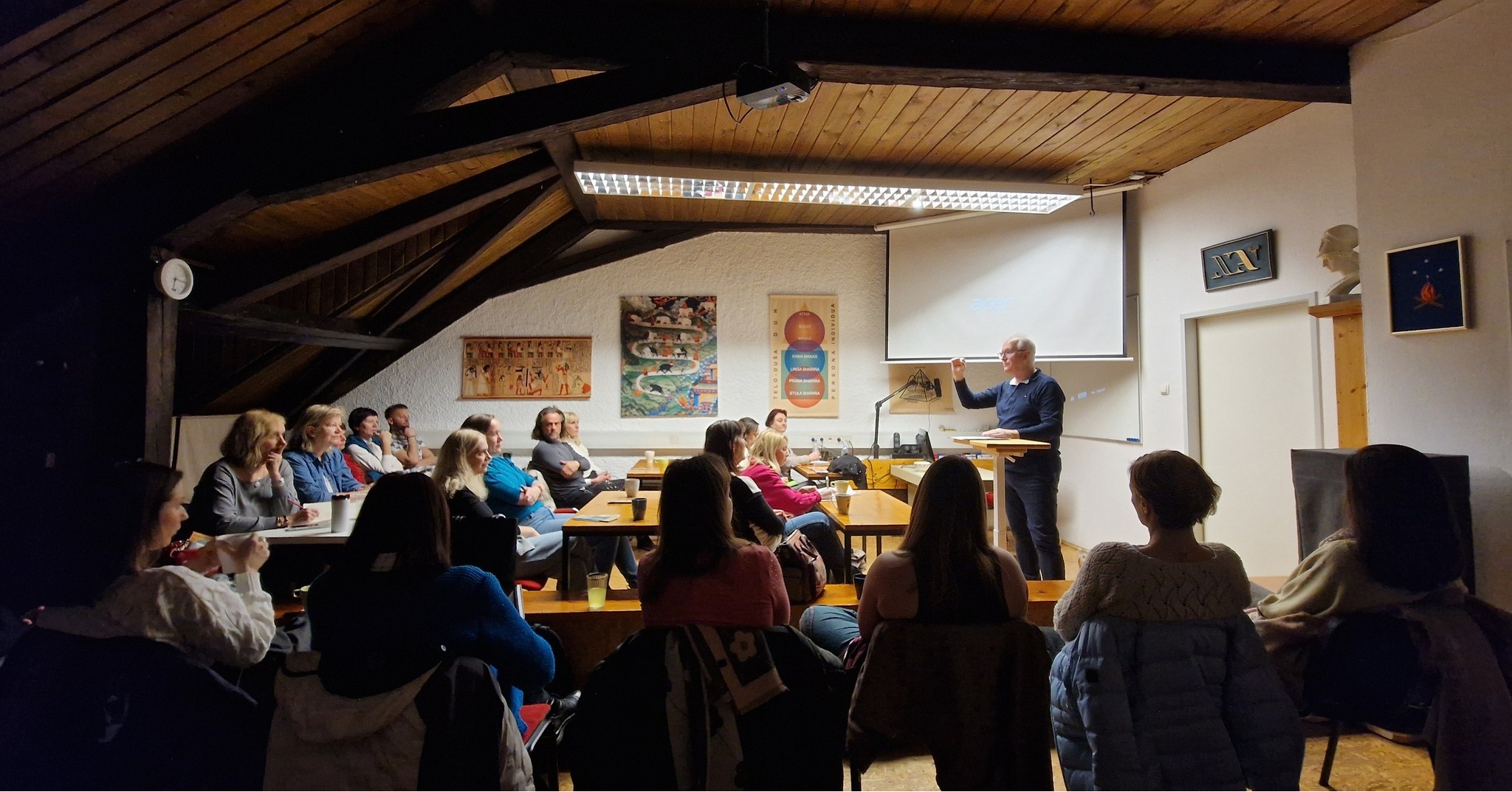
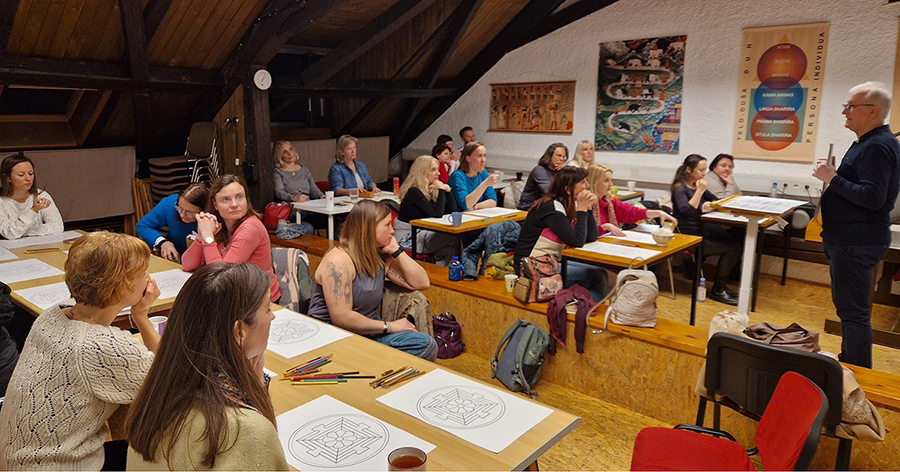
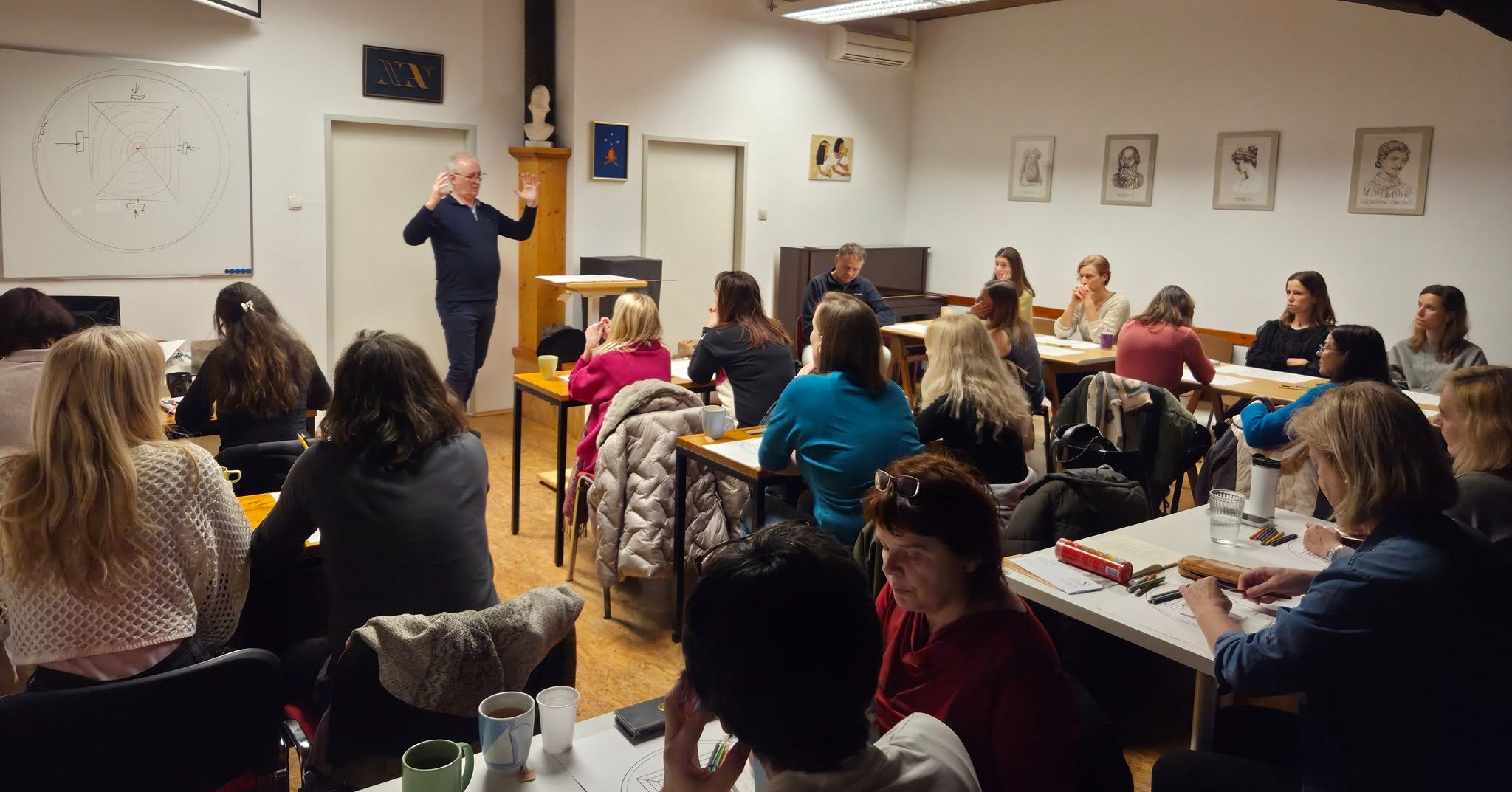
New Acropolis in Ljubljana organized a lecture with a workshop titled Mandala and the Path of Individuation – Philosophy and the Psychology of the Soul.
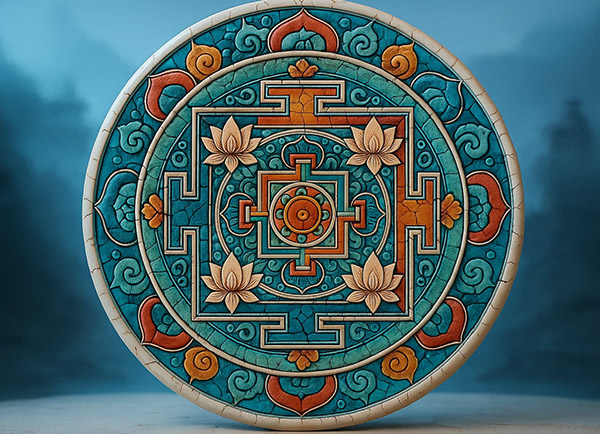 The mandala can be understood as a mysterious compass of the soul—a symbol that appears across cultures as a circle of wholeness, a center of calm, and a map of humanity’s inner development. In many traditions it takes the form of sacred geometric patterns reflecting the order of the universe and a hidden harmony within the human being. Within a simple circle lies a power that has inspired mystics, artists, scientists, and psychologists for millennia.
Carl Gustav Jung drew mandalas daily during the period of his greatest inner turmoil and later wrote that the practice of creating mandalas revealed order within chaos and led him to a renewed sense of meaning.
During the lecture, we explored why the mandala is not merely an aesthetic symbol, but a living tool for spiritual and psychological development. We examined its significance in Eastern traditions and in Western psychology, and addressed the process of individuation—the path by which an individual moves toward an authentic inner identity by integrating opposing forces within.
Through examples from art, symbolism, and everyday life, we explored how the mandala can guide us when we feel lost, scattered, or uncertain—like a lighthouse in a stormy sea. The event also included a simple practical exercise in creating a personal mandala, allowing participants to listen more attentively to the deeper layers of their psyche.